The Two-Year Foundations Program
Where serious artists build their foundations.
Two years, full-time, immersion in the foundations of drawing. Live mentorship from working masters, a cohort beside you, and deadlines that keep you moving, all the way to a professional portfolio.
Applications for the Class of 2028 closed on September 9, 2026. Get notified when the next cohort opens:
- 2
- Years, full-time
- 35-40
- Hours a week
- 68.5
- Credits
- 5-10
- Portfolio works
Six trimesters
The real commitment
A full course of study
What you graduate with
The proof
Three students in the program. On the left, work from before they started. On the right, where their work is today.
Kirsten Griffiths
Kirsten Griffiths
Kris Verjans
Kris Verjans
Guilherme Peixoto
Guilherme Peixoto
Only in this program
Classes that exist nowhere else.
At key points in the program, you can take a live class in place of the corresponding prerecorded course. These classes were built exclusively for the Two-Year Foundations Program. They are not available in the NMA library and cannot be purchased separately. Designed by Joshua Jacobo, these classes bring together the latest research and synthesis behind NMA's approach to foundational training.
You can participate in the exclusive live classes or complete the designated prerecorded courses when that better supports your schedule and pacing.
Drawing First Principles
Begin your drawing journey as masters such as Durer, Alberti, and Leonardo da Vinci prescribed, with point, line, surface, and solid. Build accuracy and control through foundational exercises in line, measurement, proportion, geometry, and construction.
Designed by Joshua Jacobo
Classical Drawing
Building on Drawing First Principles, increase your accuracy and control by designing ornamentation and architectural subjects, constructing polygons, creating hand-drawn tiling patterns, and learning to analyze and recreate complex organic curves.
Designed by Joshua Jacobo
Traditional Drawing Manuals
Learn the traditional technique of disegno, using chained, arc-like curves to construct organic outlines as the Old Masters did. The class draws from Odoardo Fialetti's 1608 manual, one of the world's earliest surviving how-to-draw books. NMA holds a copy in its Rare Books Library. Develop your skills by carefully copying individual facial features and complete heads.
Designed by Joshua Jacobo
Introduction to Drawing from Life
Building on the geometric constructions and measurement techniques introduced in Drawing First Principles, learn to translate three-dimensional subjects into clear, accurate drawings through direct observation, measurement, proportion, and structural analysis. Study light and shade, masses, edges, gradients, accuracy, and outline while working entirely from life.
Taught by Catherine Bobkoski
This live class is taught entirely through direct observation and drawing from life.
Introduction to 3D Drawing
Bridge the gap between drawing flat shapes and understanding three-dimensional form. Learn to create layouts for geometric solids and polyhedra, then cut, fold, and assemble your own physical models, much like an architecture student. Use these models as drawing subjects to strengthen your understanding of planes, volume, structure, and spatial relationships. You will also construct a proprietary grid designed by Joshua Jacobo to help organize and visualize forms in three-dimensional space.
Designed by Joshua Jacobo
You build simple physical models from paper or card in this class.
Plaster Cast Drawing
Learn an alternative to contemporary academic cast-drawing methods, emphasizing geometric accuracy, disegno outline drawing, and shading constructed through surface hatching. Apply the lessons and models found in historical drawing manuals directly to sculptural masterpieces. Learn how to light and arrange a cast for extended studies of form, light, and shade.
Designed by Joshua Jacobo
A physical plaster cast setup is required for this live class.
Classical Head Drawing 1
Learn to construct the head beginning with the egg as its primary three-dimensional form. Use grids and proportional systems to analyze photographic references, then apply these methods to a self-portrait or a portrait drawn from life. Develop a clear process for establishing the head's structure, placement, and proportions before introducing individual features.
Designed by Joshua Jacobo
Classical Figure Drawing
Learn to simplify and design the figure using constructions drawn from ancient and Old Master traditions, including stick figures, prismatic forms, seed and bean constructions, grid-based systems of proportion, and classical disegno methods. Work from sculpture, photographic reference, and imagination to develop a stronger understanding of movement, structure, and design.
Designed by Joshua Jacobo
Classical Head Drawing 2
Explore historical systems of proportion and advanced three-dimensional construction to design, understand, and rotate the human head as a solid form. Study approaches rooted in the traditions of Piero della Francesca, Albrecht Durer, and Leonardo da Vinci.
Designed by Joshua Jacobo
Classical Anatomy
Study the skeleton and superficial muscles from multiple views to develop a practical, construction-based understanding of the human figure. The class draws from the classical anatomical exemplar created by Bernhard Siegfried Albinus, using original prints held in the NMA Rare Books Library.
Designed by Joshua Jacobo
Together, these classes form the classical spine of the program. Each stage builds on the last, taking you from foundational control to a deeper understanding of form, space, movement, and the human figure. In Joshua's experience, students who commit to this structured path make some of the fastest and most significant gains at NMA. His classes have helped shape exceptional artists, including Tom Bernardes, Dylan Pym, Alisa Pasteela, and Julie Miette. Tom and Julie now bring that training back to the program, with both teaching classes within the curriculum.
What you study
Those live classes sit inside NMA's Drawing Foundations Module, the body of study behind every track in the library. Here is the full scope you cover, in a deliberate sequence, building core skill and the reasoning behind it while you develop a body of your own work.
- 01
Drawing Basics
Begin with the fundamentals: point, line, surface, solid, measurement, construction, proportions, and value, the building blocks every later skill rests on. Draw from traditional drawing manual models and geometric constructions.
- 02
Cast Drawing and Observation
Train your eye through careful observational drawing and cast studies, including grids, envelopes, triangles, plumbs and levels, the classical path to drawing accurately. Apply your knowledge of light and shade to create relievo, or 3D relief effects, and an illusionistic impression of a world beyond the picture plane.
- 03
Gesture and Sketching
Capture movement, rhythm, and life through gesture and sketching, building fluency and confidence. Learn how to bring together proportions, accuracy, and 3D construction with rhythmical movement to bring your figures to life.
- 04
Figure
Study the figure through the curriculum of senior living masters, the head through 3D construction and anatomy, and learn to draw the human form with real understanding. NMA has taught figure drawing since its founding in 2011.
- 05
Perspective and Composition
Build depth, spatial accuracy, and compelling composition, from perspective through landscape and picture-making. Learn how perspective is a traditional way to observe and another powerful creative tool at the artist's disposal, rather than a dry set of prescriptions only applicable to specific industries.
- 06
Path to Mastery
Choose your direction and bring it together: focused study in your area of interest and a finished, coherent portfolio. Learn about the components of style, how to develop a unique artistic voice, and how to draw on art historical and contemporary sources to craft your portfolio.
The outcome
Build a portfolio with purpose.
Throughout the program you develop a focused body of work that reflects your growing skills, interests, and artistic direction. Weekly Portfolio Development sessions help you identify your strongest work, make informed revisions, plan new pieces, and present your work professionally. By graduation you have a coherent portfolio of five to ten finished works, shaped through ongoing guidance from NMA faculty rather than assembled only at the end.
See what that looks like. The Class of 2026 put their final portfolios on public exhibition.
Who's teaching
You learn from working artists and educators across distinct traditions, disciplines, and professional practices. Joshua Jacobo's classical foundations are combined with live instruction, demonstrations, and personalized feedback. Here are some of the faculty you will meet.
Program Director
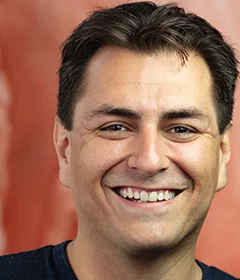
Joshua Jacobo
NMA founder, and the creator of Drawing First Principles, Classical Drawing, Traditional Drawing Manuals, Classical Figure Drawing, Classical Head Drawing, and more. He oversees the education across the program.

Julie Miette
Drawing First Principles and Classical Drawing
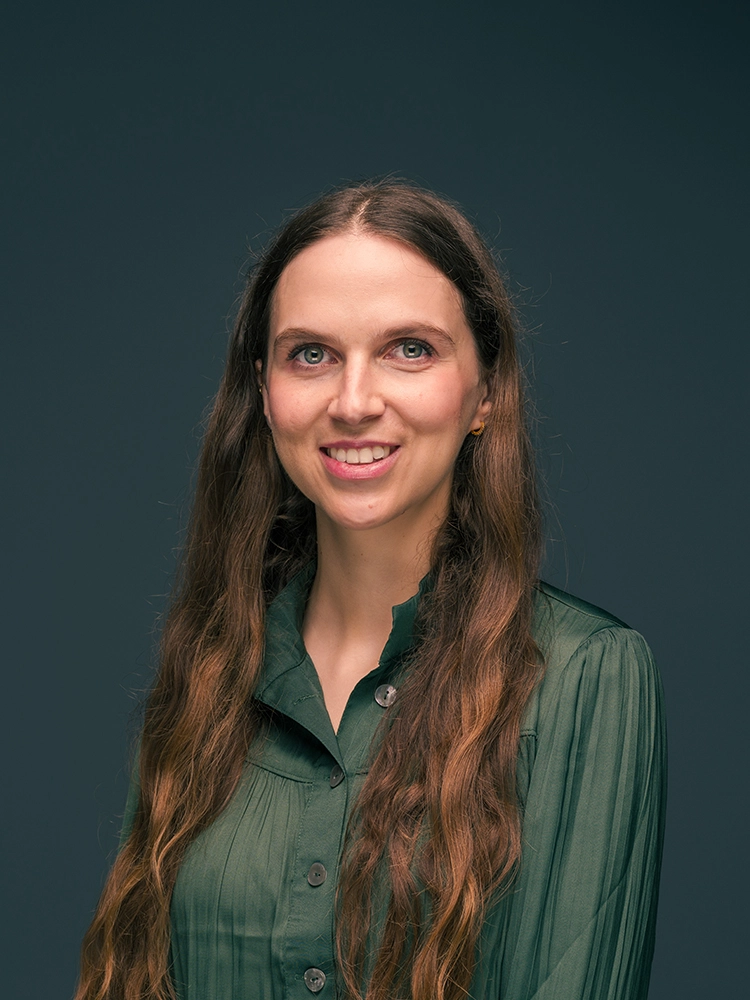
Catherine Bobkoski
Introduction to Drawing from Life and Comprehensive Review and Critique (CRC) sessions
Los Angeles Painter, Oil Painters of America 2021 National Juried Exhibition

Iliya Mirochnik
Fundamentals of Observational Drawing and Portfolio Development sessions
Character Lead at ZA/UM, Award-Winning Portrait Artist

Bill Perkins
Composition for the Visual Artist, Finding Your Voice as an Artist, and Portfolio Development sessions
Disney Art Director and Visual Development Expert
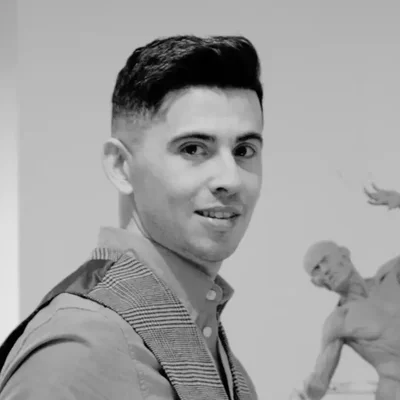
Tom Bernardes
Classical Anatomy and Comprehensive Review and Critique (CRC) sessions
Tom is a student in this program who now teaches Joshua's material inside it. His painting is in the student work below.
Student work
What our students make
Tom Bernardes
Chloe Anne Cheng
Daniel Kent
Amy Lilley
Kirsten Griffiths
Julie Crawford
Jesper Axelsson
What our students say
This opportunity to study the foundations in a structured way, it felt like everything that I'd been looking for. I'm a mom and I work from home. I just felt that my opportunity to go to art school had passed me by and that that wouldn't come around again. And so this really felt like that opportunity that I missed.
Amy Lilley
In the Two-Year Foundations Program
I feel more confident. I feel like I've grown. And when I look back at where I started, I feel like I'm a much stronger artist. And it's a growth on many levels. Technique and also understanding of concepts.
Jesper Axelsson
Program Graduate. Visual development and story trainee on the feature film Nikki; comic artist for Lundagård; shown in the NMA Roots Exhibition. From Sweden.
I was a little afraid at first that I would not be able to keep up, because I still considered myself a complete beginner. But you quickly realize that everything is extremely well thought through. They meet you at the very beginning and build you up from there.
Rinaldo Bauer
Program Graduate
This course remains one of the best things to ever happen to me.
Denise Cranston
Program Graduate
We get exposed to a lot of content and a lot of instructors who do things all slightly different. Even if they disagree on something, you can figure out for yourself what works and what you like. Those extra courses, those seminars, those live classes, and the extra interaction that we get is the biggest difference. It helps put everything into context, I feel.
Guilherme Peixoto
Program Graduate
The 2-year program is really difficult. It is hard work, but if you trust the process and you put the time in, you will definitely see results and you'll probably see them faster than you thought you would.
Kirsten Griffiths
In the Two-Year Foundations Program
Tuition
Less than one year of in-person art school.
$5,500 a year, $11,000 for the two years. A single year at an accredited art school like RISD or Pratt runs over $60,000 in tuition alone.
Pay in full
$11,000
$10,780
Save 2% paying up front
One payment
Pay for both years up front. By bank transfer (ACH) it is 5% off, $10,450 in total.
Per year
$5,500
Two payments
One payment at the start of each year, $11,000 in total.
Pay by bank transfer (ACH) and save a further 3% on either plan.
Need-based scholarships
All three full-ride scholarships for this cohort have been awarded, and scholarship applications are closed.
Prices are in US dollars for the full two-year program. Paying both years up front takes 2% off, and paying by bank transfer (ACH) takes a further 3%. You choose once you are accepted. Applying costs a separate $100 non-refundable application fee, which is credited toward your tuition if you are accepted.
Applications
Class of 2028
Applications are closed.
The application window for the Class of 2028 closed on September 9, 2026, and the cohort begins September 21. If you applied, we have your application and will follow up by email. The next cohort's dates and application window will be announced on this page and by email.
Good to know
The next cohort
Get notified when applications open.
Applications for the Class of 2028 are closed. Join the list and we will email you when the next cohort's dates and application window are announced.